
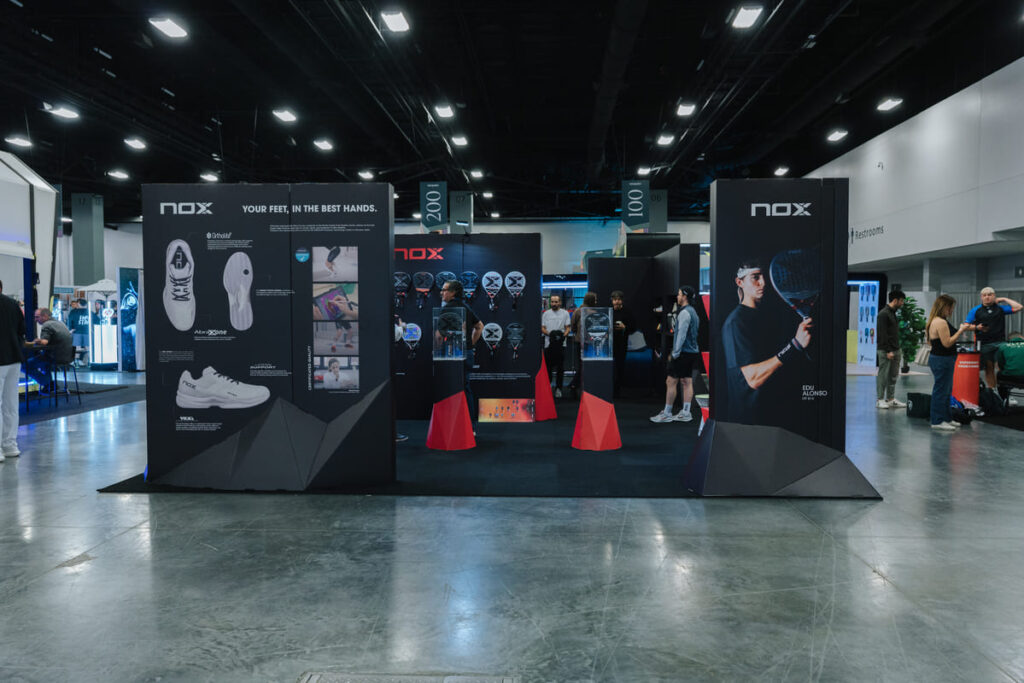
Most padel players compare rackets by weight, shape, or price and overlook the single variable that defines everything else: what the face is actually made of. Carbon fiber construction determines how a racket transfers energy, handles wall rebounds, and holds up over thousands of hours of play. NOX has built its entire performance ladder around carbon fiber engineering, and once you understand the tiers, picking the right racket stops being a guessing game.
"Carbon fiber is not just a premium label. It is a blueprint for how the racket will feel on volleys, smashes, and defensive lobs. NOX uses it differently at each tier, and that difference is worth understanding before you buy."
1. Why carbon fiber matters in padel rackets
Before going brand-specific, it helps to understand why the face material is the most consequential spec on any padel racket. Unlike tennis, where the swing arc is long and the racket face absorbs a lot of variability, padel demands short, precise strokes and constant adaptation to unpredictable wall rebounds. The construction of the face shapes every millisecond of that contact.
Carbon vs fiberglass
Carbon fiber is significantly stiffer and lighter than fiberglass. That stiffness means more energy returns to the ball on contact, with less lost in frame flex. Fiberglass is more forgiving but slower off the face.
What K means in carbon
The K number refers to how many carbon filaments are bundled per tow. 3K has 3,000 filaments, 12K has 12,000, and 18K has 18,000. More filaments per bundle does not automatically mean stiffer or softer: weave pattern and surface treatments play an equally important role, as NOX demonstrates.
Why it matters more in padel
Wall rebounds add a second point of impact that tennis does not have. Face construction determines how predictable that off-wall response will be, which is why advanced players consistently prioritize understanding this spec before buying.
2. How NOX uses carbon fiber: construction tiers
NOX structures its lineup around a clear progression from fiberglass-hybrid entry models to full-carbon Luxury-line constructions. One important clarification: in NOX terminology, the K designation (3K, 12K, 18K) always refers strictly to the weave of the hitting face. The frame across virtually all high-end NOX models uses a standard 100% carbon tubular structure, engineered for structural rigidity and impact resistance regardless of face tier.
Tier 1 — Entry / mid range
These rackets combine a fiberglass hitting face with a carbon-reinforced frame. The fiberglass face adds dwell time on contact, meaning the ball stays on the surface slightly longer, which translates to better control for players still building consistency. The carbon frame keeps weight low and adds enough rigidity to prevent unwanted flex on off-center hits.
Best for: players new to padel or transitioning from tennis. Arm-friendly and forgiving on mishits.
Tier 2 — Mid-high range (3K carbon face)
At this level, NOX moves to a 3K carbon face with a tightly compacted weave pattern. The result is a noticeably firmer, faster response off the face. Volleys feel crisper, smashes carry more punch, and the sweet spot is more defined. This construction rewards consistent technique and is where serious club-level players tend to start.
Best for: players with a developing game who want more power and sharper feedback without going full Luxury line.
Tier 3 — Luxury line (12K Carbon Alum Xtrem)
The 12K Alum Xtrem face uses a hypercompact, tightly tensioned carbon weave combined with an aluminized surface treatment. The outcome is the firmest, driest feel in the NOX range: maximum stiffness, fast ball exit, a reduced sweet spot, and high sensitivity to off-center contact. This is a technically demanding construction that rewards players with fast swing speeds and precise stroke mechanics.
Best for: advanced and competitive players who want a reactive, unforgiving tool and have the technique to match it.
Tier 4 — Luxury line (18K Carbon Alum)
The 18K Alum face is NOX's most sophisticated construction and also its most counterintuitive one. Despite having more filaments per tow than the 12K, it plays softer. NOX achieves this deliberately through a more open, looser weave pattern that allows the face to flex and absorb impact rather than deflect it. The aluminized coating adds thermal stability and increases dwell time, making the ball feel like it loads into the face before releasing. Models like the AT10 18K and the Nerbo series sit at this tier. If you want to compare the full range of NOX padel rackets across both 12K and 18K constructions, Racket Central carries the complete 2026 lineup with detailed specs for every model.
Best for: advanced players who prioritize arm comfort, a wider sweet spot, and progressive power over raw stiffness.
3. The 12K vs 18K paradox: what NOX does differently
This is where NOX breaks from conventional carbon fiber logic and where most generic buying guides get it wrong. In standard textile engineering, a higher K count produces a thicker, heavier bundle that tends toward greater stiffness. By that logic, 18K should play stiffer than 12K. With NOX, the opposite is true, and the reason is intentional.
Why 18K plays softer than 12K in NOX rackets
NOX uses a deliberately open and looser weave on its 18K faces compared to the hypercompact pattern on the 12K Alum Xtrem. Because the fibers are less tightly bound, the face gives slightly under impact instead of deflecting the ball immediately. Combined with the aluminized coating that increases dwell time, the 18K construction produces a feel that is springier, more elastic, and considerably more comfortable on the arm over extended sessions.
The aluminized treatment on both Luxury tiers also serves a practical purpose: it stabilizes the face against sharp temperature changes, which matters for players in outdoor courts or variable climates like much of the U.S. padel market.
| Characteristic | NOX 12K Alum Xtrem | NOX 18K Alum |
|---|---|---|
| Touch and feel | Dry, firm, rigid | Soft, elastic, intermediate |
| Passive ball exit | Lower. Demands more swing speed | Higher. Spring effect on contact |
| Maximum power | Higher ceiling for fast swing players | Progressive and more controlled |
| Sweet spot tolerance | Smaller. Penalizes off-center hits | Wider. Absorbs vibration and forgives errors |
| Arm comfort | More vibration over long sessions | Noticeably more comfortable |
| Ideal game style | Aggressive attackers, net players | All-round players, high-volume trainers |
4. On-court feel across the full NOX range
Putting all four construction tiers side by side shows how deliberately NOX has designed each step of the ladder. The progression is not simply about adding stiffness as you move up in price. There is a clear split at the Luxury level between two very different performance philosophies.
| Face construction | Best for | Feel | Power | Control |
|---|---|---|---|---|
| Fiberglass face | Beginners | Soft, forgiving | Medium | High |
| 3K carbon face | Club / intermediate | Crisp, responsive | High | Medium |
| 12K Alum Xtrem | Advanced attackers | Dry, stiff, fast | Very high | Technical |
| 18K Alum | Advanced all-round | Elastic, springy, comfortable | Progressive | High |
5. Who should buy which NOX carbon tier
The right NOX racket is not the most expensive one. It is the one matched to where your game actually is and how you want the racket to behave under pressure. Here is a practical decision framework.
Choose by player profile
- New to padel or playing fewer than 2x per week — start with a fiberglass-carbon hybrid. The softer feel compensates for technique gaps and protects your arm while you build habits.
- Playing 2 to 3x per week at club level — a 3K carbon face is the right step up. You will notice the speed upgrade on volleys immediately, and your consistency will be solid enough to handle the extra responsiveness.
- Competing in local or regional tournaments with an aggressive game — the 12K Alum Xtrem is your construction. Maximum stiffness, fast ball exit, and high sensitivity reward players with technically clean strokes and fast swing speeds.
- Competing at a high level but training 4 or more times per week — the 18K Alum is the smarter long-term choice. The wider sweet spot and arm-friendly feel matter when you are putting in volume, and the progressive power profile suits all-round play better than pure attack.
- Transitioning from tennis — prioritize control over power regardless of budget. A 3K or 18K construction will give you the touch and predictability that tennis players expect without the sharp, dry response of the 12K that tends to push shots long during the adaptation phase.
Frequently asked questions
What does 12K and 18K mean in NOX padel rackets?
In NOX rackets, the K designation always refers to the weave of the hitting face, not the frame. 12K means 12,000 carbon filaments per tow; 18K means 18,000. However, the number alone does not determine stiffness. NOX uses a tighter weave on its 12K face (Alum Xtrem) and a more open weave on its 18K face (Alum), which results in the 12K playing firmer and the 18K playing softer. The frame across the Luxury line uses standard tubular carbon construction throughout.
Is the NOX 18K better than the 12K?
Neither is objectively better. They target different playing styles. The 12K Alum Xtrem is designed for aggressive attackers who want maximum stiffness, fast ball exit, and sharp feedback. The 18K Alum is designed for players who prioritize arm comfort, a wider sweet spot, and a springier, more elastic feel. If you train at high volume or prefer an all-round game, the 18K is typically the smarter choice long-term.
Are NOX padel rackets good for beginners?
Yes. NOX offers entry-level models with fiberglass faces and carbon-reinforced frames specifically designed to be forgiving and arm-friendly. Beginners benefit from the larger sweet spot and softer feel these constructions provide while they develop technique and build consistency.
What is the aluminized coating on NOX Luxury rackets?
The aluminized treatment on NOX 12K Alum Xtrem and 18K Alum faces serves two purposes. First, it stabilizes the carbon face against sharp temperature changes, which is relevant for outdoor play in variable climates. Second, it increases dwell time on contact, giving the ball a slightly longer moment on the face before releasing. On the 18K, this effect is especially noticeable and contributes to the springy, loaded feel the construction is known for.